When planning a new residential build in Hawaii, one of the most critical structural decisions involves selecting the framing system for your roof. The choice between pre-fabricated roof trusses and traditional stick-built rafters significantly impacts not only the structural integrity and design possibilities but also the overall cost-effectiveness and construction timeline of your project. At Precision Truss, we understand the unique challenges and opportunities that come with building in the islands, and we're here to help clarify which option might be the best fit for your Hawaiian home.
The Efficiency of Roof Trusses
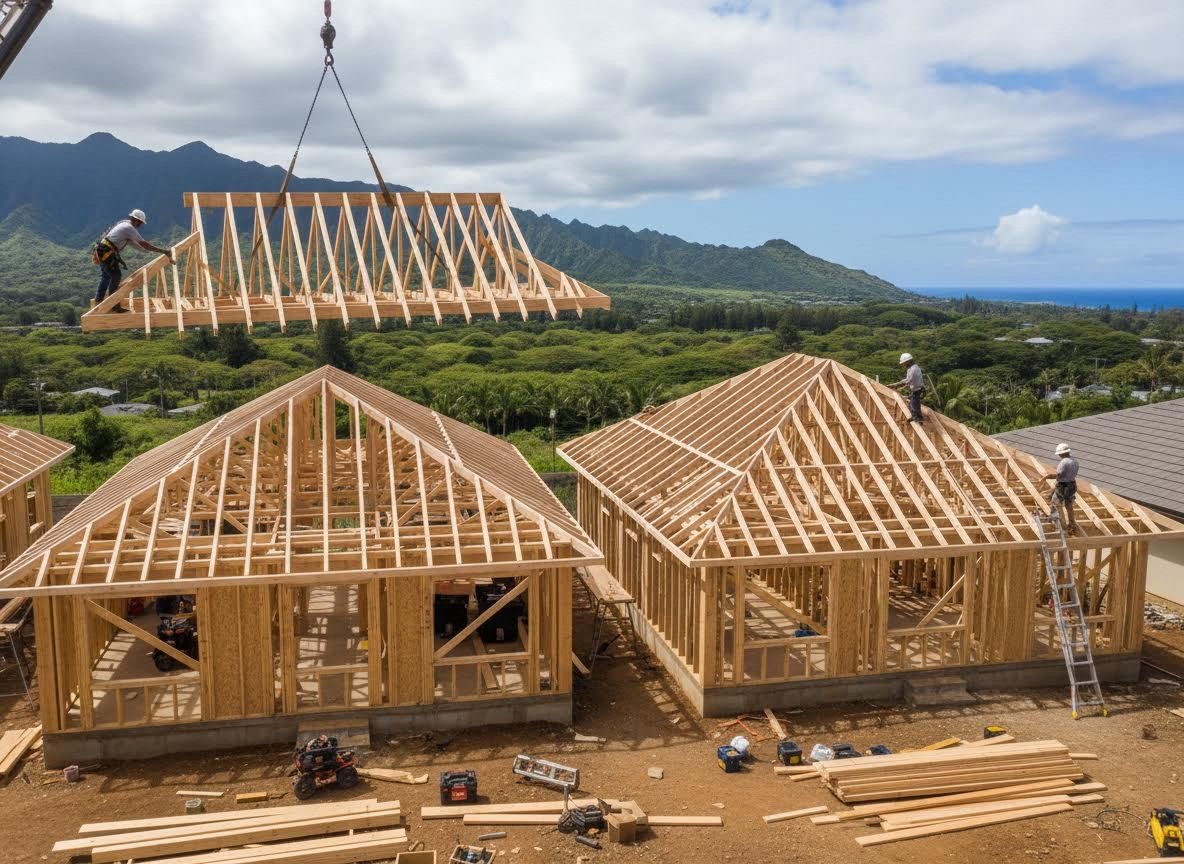
Roof trusses are pre-engineered, factory-built components designed to support the roof load and transfer it to the exterior walls. These systems are custom-fabricated off-site by a roof truss manufacturer in Hawaii, ensuring consistent quality and precise dimensions. The manufacturing process for pre-engineered wood trusses on Oahu involves sophisticated software and controlled conditions, which translates to superior structural integrity and predictable performance. This approach often leads to reduced material waste on the job site and a faster, more efficient installation process compared to traditional methods.
The Traditional Approach: Rafters
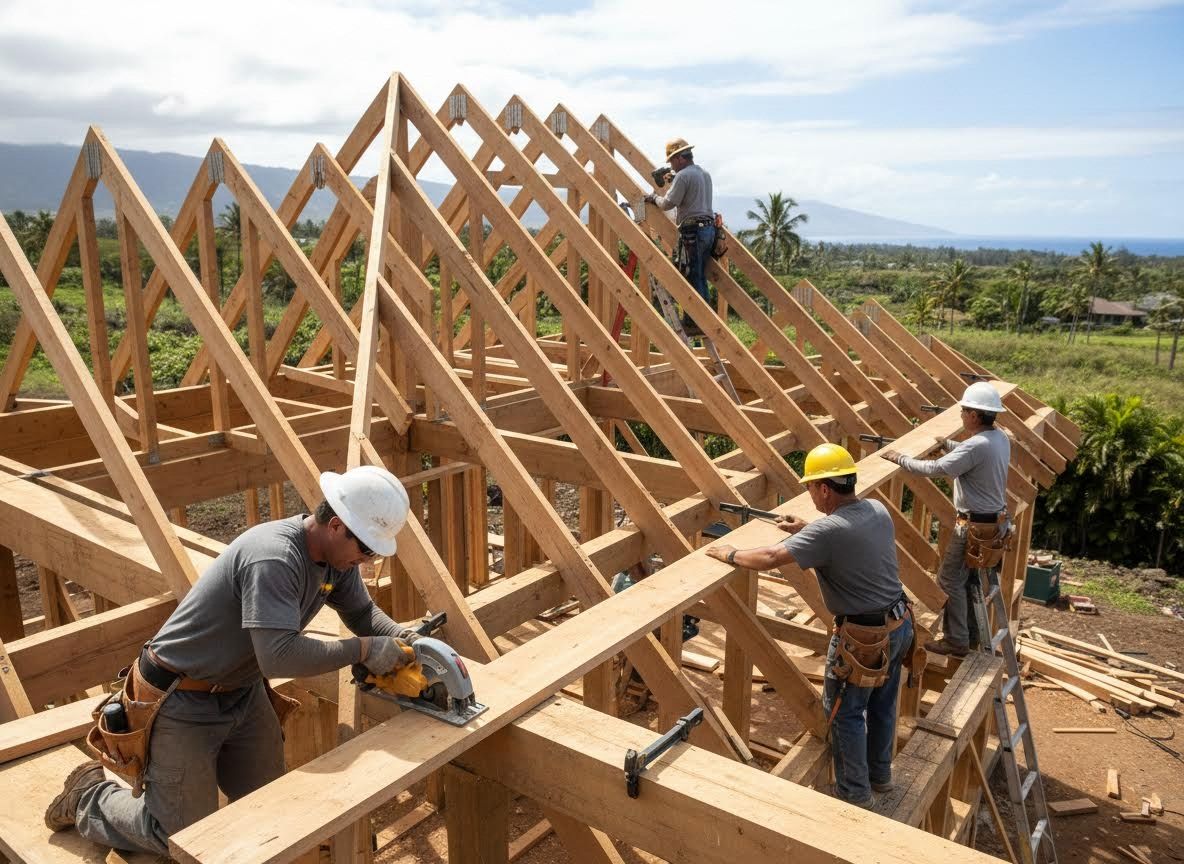
Rafters, on the other hand, are individual lumber pieces cut and assembled on-site to form the roof's framework. This traditional "stick-built" method allows for greater flexibility in creating complex roof designs, as each component is tailored during construction. While rafters can be adapted to specific architectural nuances, they typically require more skilled on-site labor and a longer construction period. The precision of the final structure is highly dependent on the craftsmanship and experience of the framing crew working directly on the project site.
Cost-Effectiveness in the Hawaiian Construction Landscape
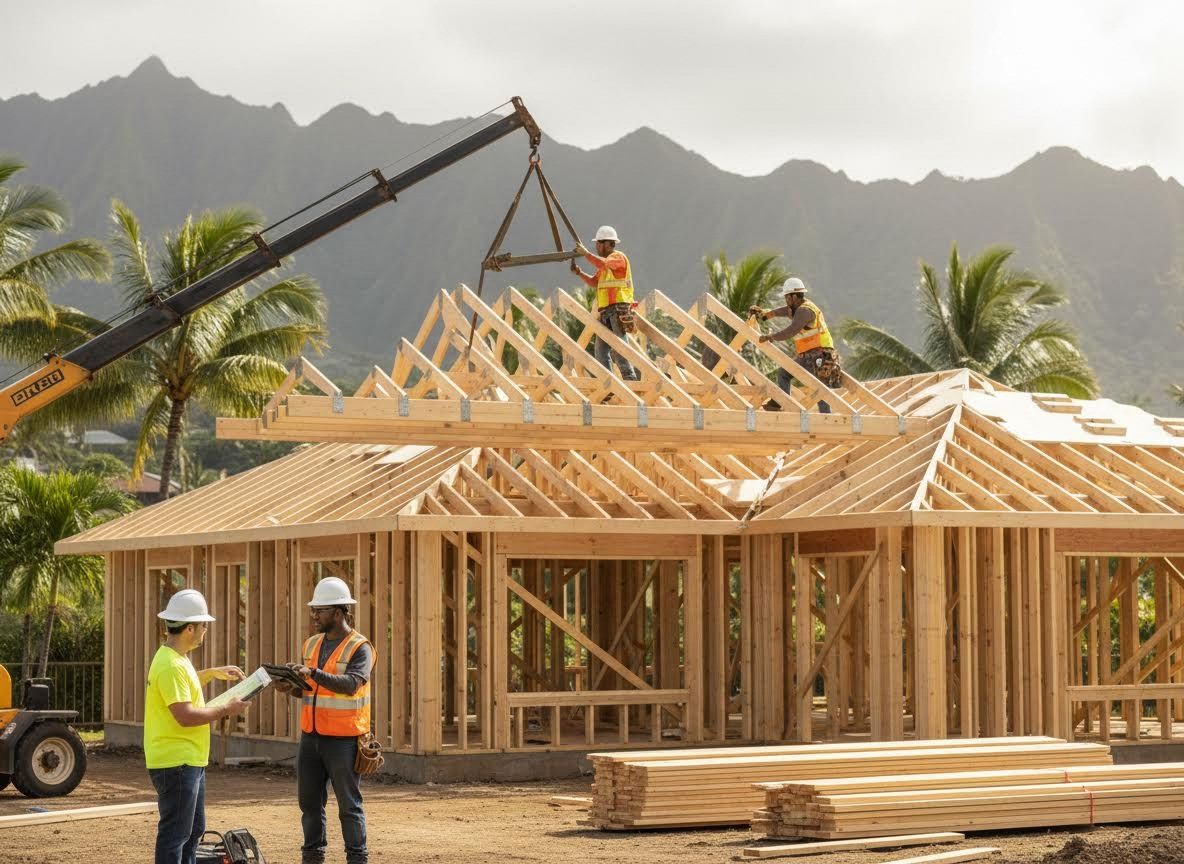
When evaluating cost-effectiveness in Hawaii, several factors tip the scales. While the initial material cost of pre-engineered trusses might sometimes appear higher than raw lumber for rafters, the total project cost often favors trusses. This is primarily due to significant savings in labor and construction time. With trusses, installation can be remarkably swift, often taking days instead of weeks, which is a considerable advantage in an environment with high labor costs. Furthermore, trusses contribute to hurricane-rated roof systems in Hawaii by being engineered to withstand specific wind loads, reducing the need for extensive on-site reinforcement. Their consistent quality also minimizes rework and potential structural issues down the line. For projects requiring specific solutions like custom floor truss design or precise integration with other building elements, BIM-coordinated trusses in Hawaii offer unparalleled accuracy, further reducing errors and associated costs.
Beyond the Price Tag: Value and Predictability
Beyond the immediate financial outlay, trusses offer substantial long-term value and predictability for Hawaiian residential builds. Their engineered precision means less material waste and a higher degree of structural integrity, crucial for the challenging island climate. The rapid enclosure of the building shell protects other construction materials from weather exposure, preventing delays and potential damage. This streamlined process allows builders to maintain tighter schedules and more accurately predict project completion dates, which is invaluable in residential construction. The comprehensive engineering behind each truss ensures that the entire roof system is optimized for performance and durability.
The decision between roof trusses and rafters for your Hawaii residential build is multifaceted, but pre-engineered trusses generally offer a more cost-effective and efficient solution, particularly when considering labor, time, and the stringent structural requirements of hurricane-rated roof systems in Hawaii. At Precision Truss, our team knows the consistency, speed of installation, and engineered precision of trusses provide significant advantages that often outweigh the perceived flexibility of stick-built rafters. To understand how custom-engineered solutions can optimize your next construction endeavor, explore the benefits of working with an experienced roof truss manufacturer. We'd love to hear from you; contact us today.